

SNE NETWORK.AMRITSAR/GURDASPUR/FEROJPUR/PATHANKOT.
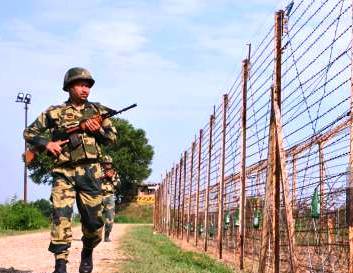
Farming on their own land has become a major challenge for Punjab farmers along the India-Pakistan international border. Farmers must undergo daily security checks to reach their fields beyond the barbed wire fence. They are only allowed to work in the fields during designated hours under BSF surveillance.
In the morning, time is spent checking identity cards and checking agricultural equipment, while returning before the gates close in the evening is essential. Consequently, farmers barely have 5-6 hours a day for farming. Approximately 21,500 acres of agricultural land in Punjab’s six border districts lie between the barbed wire fence and the international border. Farmers in approximately 220 villages depend on this land for farming.
In addition to limited time, problems with crop selection, irrigation, labor availability, and protecting crops from wild animals also add to their difficulties. The picture emerging from border stations shows that farming is becoming increasingly difficult for farmers.
Irrigation at night becomes difficult.
Sometimes electricity is available only at night, or tube wells require more time to operate. However, farmers are unable to irrigate due to lack of permission to move at night. If water is not applied during the day, they have to wait for the next available time.
Working hours in border fields are generally from 9 am to 5 pm in summer and from 10 am to 4 pm in winter. However, this may vary depending on the individual BSF battalion and the local conditions. Entry into the fields is allowed only after presenting identity cards, undergoing security checks, and checking equipment at the gate. Checks are also conducted upon return. Morning formalities often consume an hour or two.
In some areas, security agencies have been objecting to growing crops taller than three feet due to visibility concerns. This impacts the sowing of sugarcane, maize, sorghum, millet, and sunflowers.
Farming across the barbed wire fence is becoming increasingly difficult for border farmers in Pathankot district. Despite owning hundreds of acres of agricultural land, they are unable to grow crops of their choice. According to farmer Ravinder Singh, security agencies’ objections to the cultivation of tall crops like sugarcane, maize, sorghum, millet, and sunflowers have limited their farming options. Consequently, a growing dependence on wheat, paddy, and low-growing vegetables is taking its toll. This hampers crop diversification and impacts per-acre income.
Wild boars and nilgai are destroying farmers’ crops in many areas across the barbed wire fence around the Hussainiwala border. Due to the constant losses, some farmers have even stopped sowing paddy, wheat, and vegetables. Land once filled with lush crops has now become a jungle of reeds. Farmer Balveer Singh explained that he owns land near the village of Bhikhi Pind in Pakistan.
According to farmers, some people used to place improvised explosive devices made of potash and flour in their fields to kill wild animals. Now there is a ban on these, due to which the problems have increased.###USA###UK###CANADA###PUNJAB###BORDER###INDIA###AUSTRALIA###NEWZEALAND###