

EDITOR-IN-CHIEF.VINAY KOCHHAR/CHANDIGARH/NATIONAL-DESK.
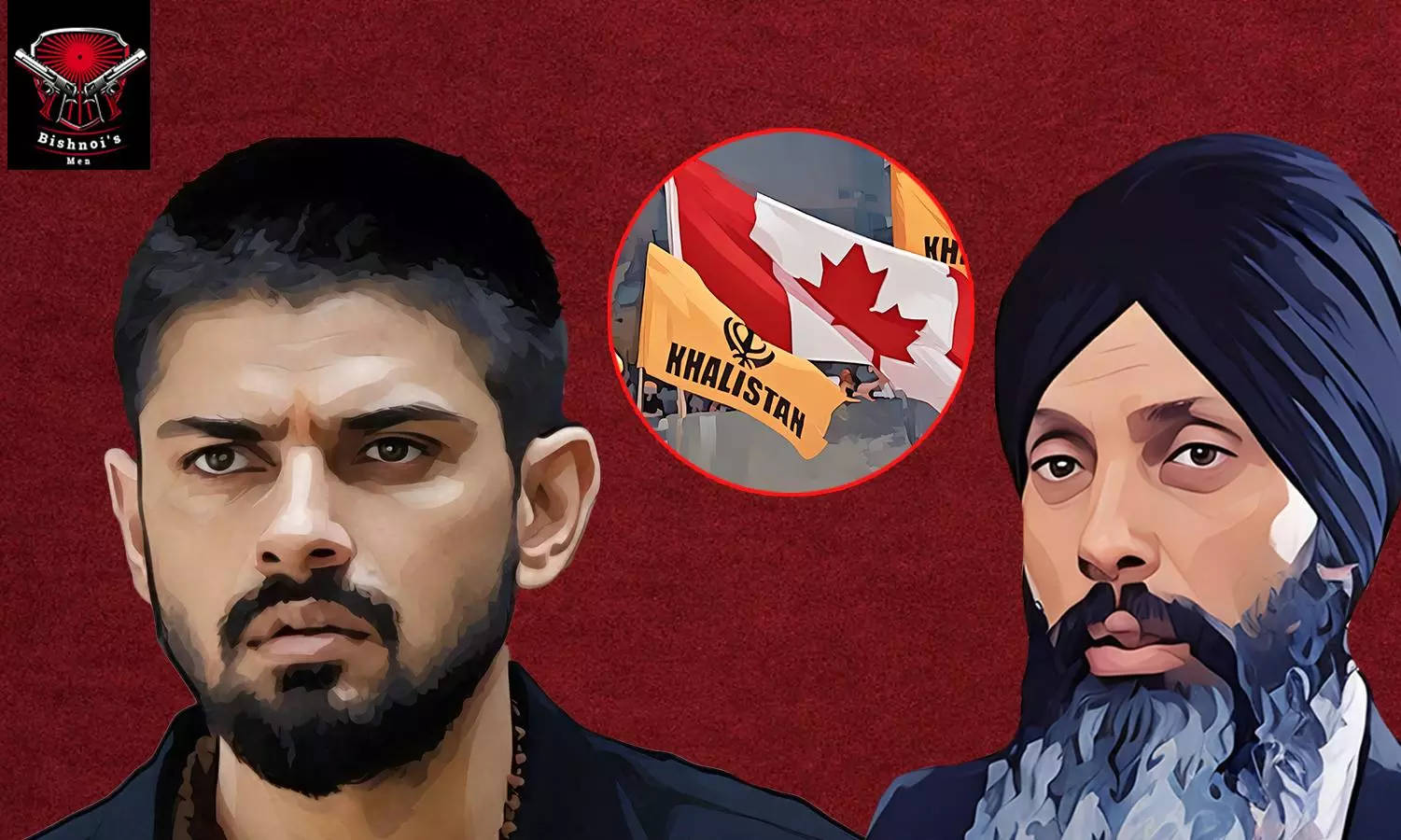
After the US Justice Department charged jailed gangster Lawrence Bishnoi, Punjab Police SHO Gurinderjit Singh Nagra, and others with serious charges including organized crime, conspiracy to murder, extortion, and running a criminal racket, discussions have intensified regarding their possible extradition.
The India-US Extradition Treaty Process Must Be Followed
Legal experts say that simply framing charges in a US court does not automatically result in extradition. The full process under the India-US Extradition Treaty and Indian law must be followed.
Key Principle: Dual Criminality
According to Advocate Rajesh Verma, a 1997 bilateral extradition treaty is in effect between India and the US. Its most important principle is dual criminality. This means that the crime for which extradition is sought must be punishable in both countries and carry a minimum sentence of one year. Murder, criminal conspiracy, extortion, drug trafficking, and arms offenses are also serious crimes in India. Therefore, in principle, the US charges could be grounds for extradition.
The Central Government Will Make the Final Decision
He explained that if the US sends a formal request, it will first reach the Ministry of External Affairs. The Ministry of Home Affairs and relevant investigative agencies will then examine whether the request complies with the India-US Treaty and the Extradition Act of 1962. After the preliminary investigation, the case will go to court, where the legal conditions will be examined. Even after the court’s opinion, the central government will make the final decision and may seek additional conditions or diplomatic assurances if necessary.
Extradition Can Be Delayed
According to Advocate Verma, Lawrence Bishnoi’s case is unique because he is already in judicial custody in India and has several cases of murder, extortion, and organized crime pending against him in various states. Under the Extradition Act of 1962, the Indian government has the right to postpone the extradition of an accused if he has pending trials or is serving a sentence in the country. In such cases, India can first settle domestic cases.
Gives the Indian government special powers in such cases
However, the situation may be different in the case of SHO Gurinderjit Singh Nagra. If an investigation or trial is initiated against him in India on similar charges, India will prioritize domestic action first. Verma explained that Sections 34 and 34A of the Act give the Indian government special powers in such cases, under which action can be taken in India based on alleged crimes committed abroad.
India not obliged to accept immediately
Retired police officer Surinder Kalia said that even if the US makes a formal request for extradition, India will not be obliged to accept it immediately. Each case will undergo a separate legal investigation. India may want to first complete the cases pending against Lawrence in India.
The extradition process is lengthy and involves multiple steps.
He said that the case of Tahawwur Rana, an accused in the 26/11 Mumbai attacks, also illustrates the lengthy and multi-step process of extradition. The final decision in such cases depends on the opinion of Indian courts and the discretion of the central government.###USA###UK###CANADA###GANGSTER-LAWRENCE-NEWS###PUNJAB###CHANDIGARH###INDIA###AUSTRALIA###GERMANY###IRELAND###SWEDEN###EUROPE###CHINA###HUNGRY###FRANCE###ITLAY###ROME###RUSSIA###UKRAINE###VIETNAM###SINGAPORE###@